A 2003fg-like supernova in an apparent hostless environemnt
Bose, S. et al., 2026, A&A, 706, A252
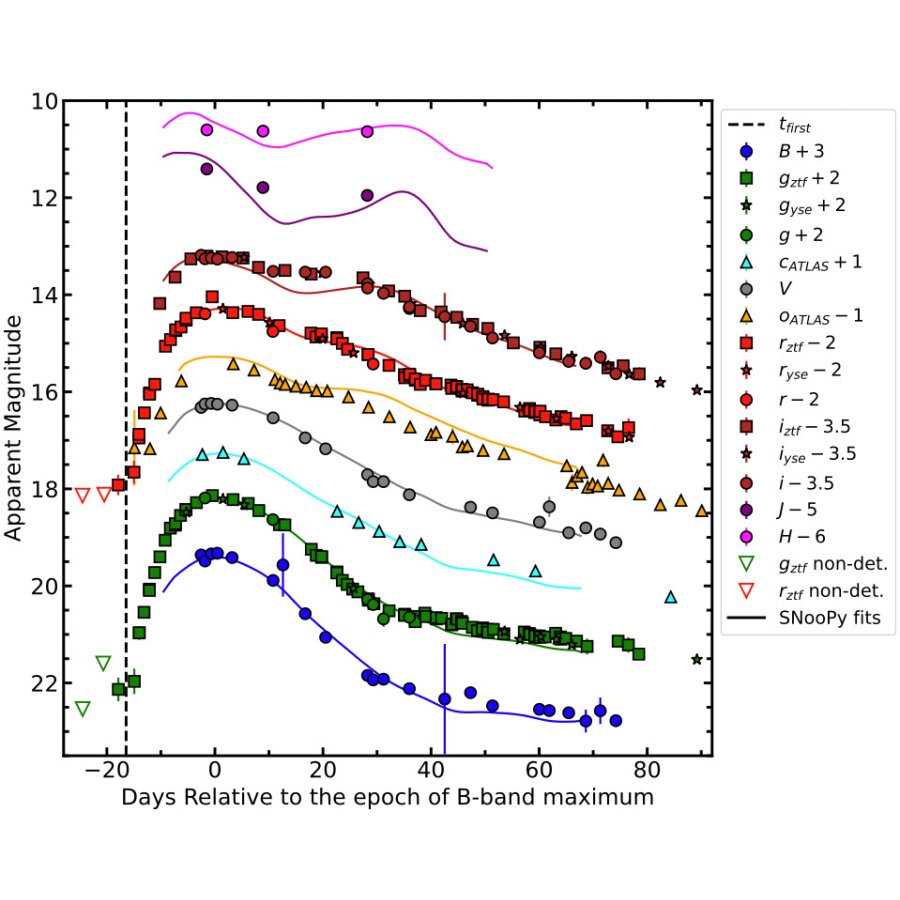
SN 2021hem belongs to a rare group of Type Ia supernovae known as “2003fg-like” or sometimes referred as “super-Chandrasekhar” supernovae. These explosions typically shine unusually brightly and do not show the secondary peak in their near-infrared light curves that is common in normal Type Ia events. For SN 2021hem, the peak brightness in the B band reached an absolute magnitude of –20.0, significantly brighter than ordinary Type Ia supernovae.
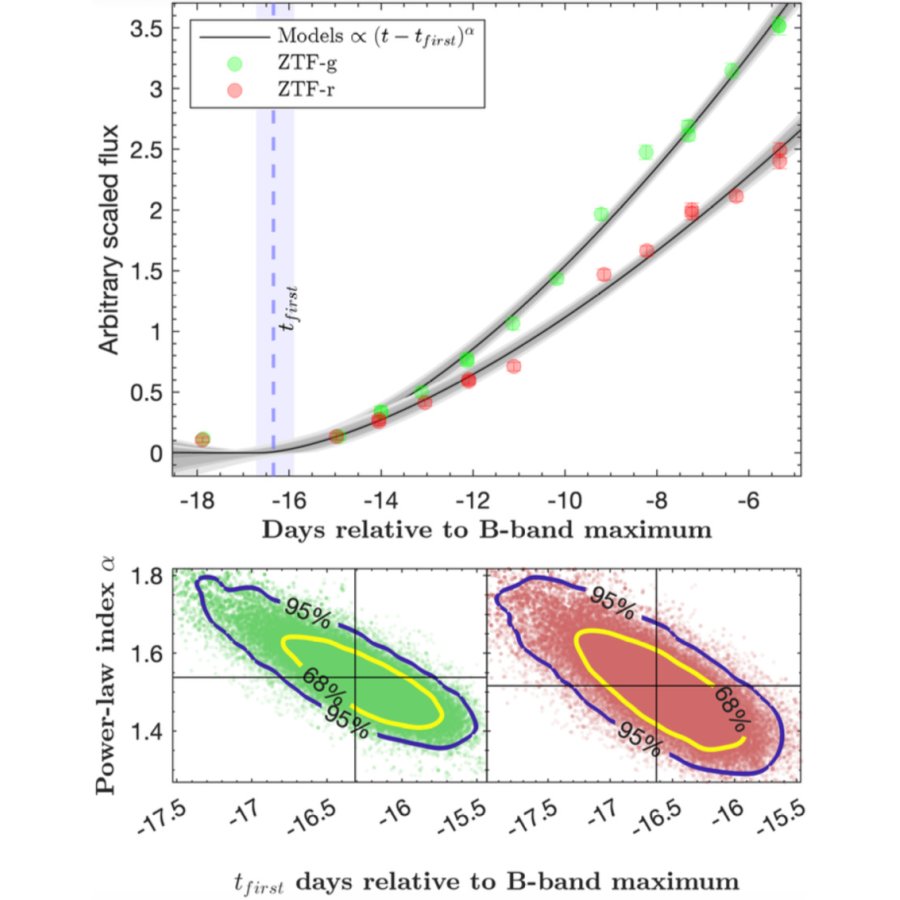
In the earliest stages, a supernova’s atmosphere is expected to behave like an opaque, expanding “fireball,” producing a smooth, power-law increase in brightness. However, SN 2021hem showed an unexpected feature: its first detection occurred about 1.5 days before the onset of this expected fireball rise. Combined with its early color (measured from the g–r bands), this behavior cannot be explained by interaction with surrounding material or with a companion star. A more likely explanation is that radioactive \(\rm ^{56}Ni\) was mixed only shallowly—or distributed asymmetrically—within the ejecta. A double-detonation scenario involving a thin helium shell is also possible, though less favored.
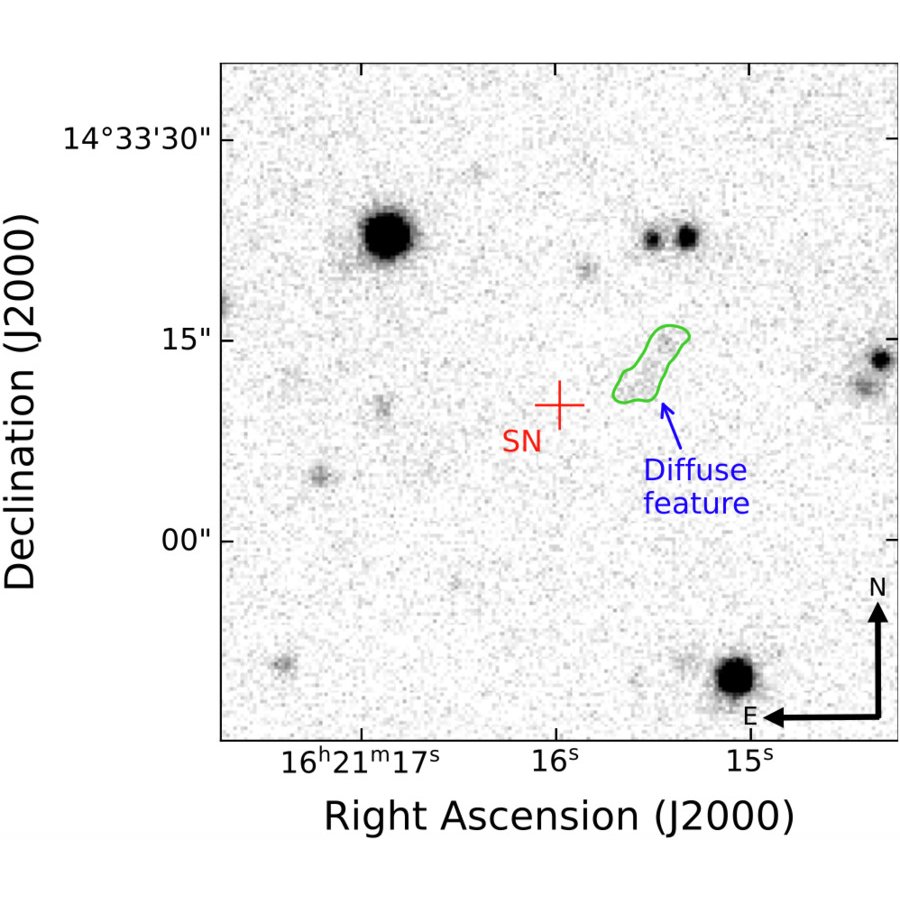
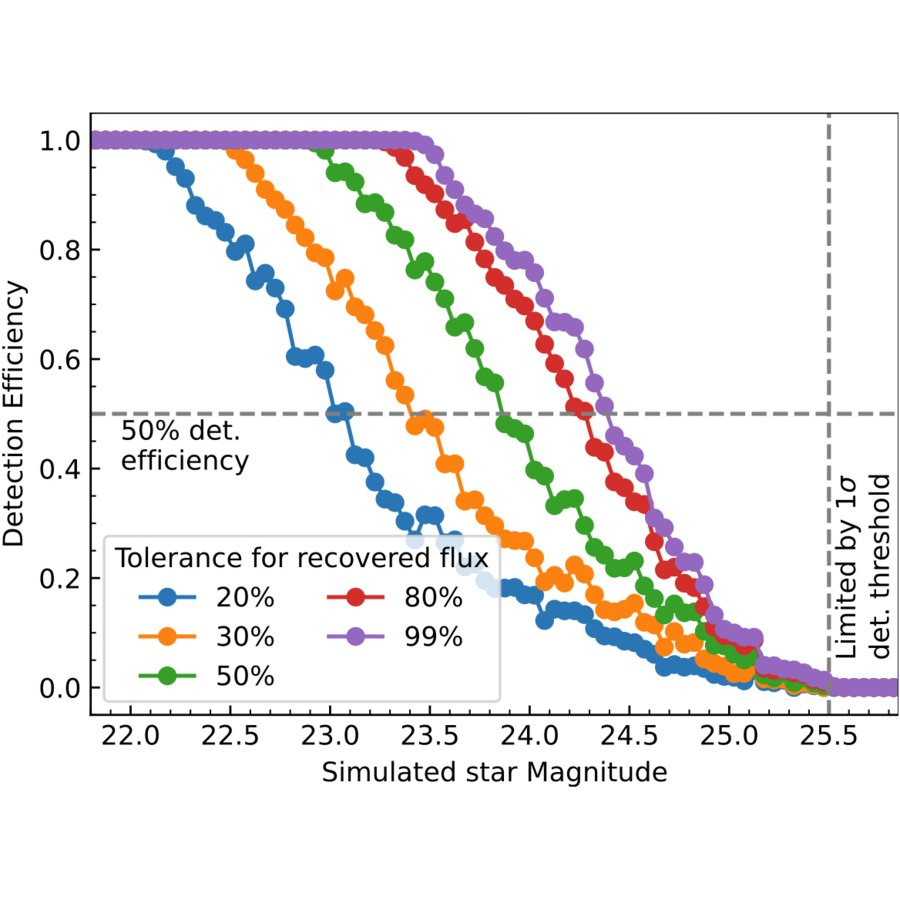
Another intriguing aspect is the apparent absence of any host galaxy at the supernova’s position. Deep imaging with the 10-meter GTC telescope was used to search for a host. By performing a simulation of injecting artificial stars into the image and measuring its detectability, we determined a point-source limit of \(m_{lim,r}=24.4\)…